Misty Simon
TL;DR: Prologues are like garlic. Use them right, and they elevate the whole dish. Use too much or use it wrong… and the vampires aren’t the only ones running away.
Look, sometimes you need a prologue.
It physically pains me to admit that because I’ve had… let’s call them trust issues with prologues. Not from writing them—reading them.
I started writing over a decade ago, back when self-publishing was still in its awkward adolescent years. At the time, a lot of very confident business-minded folks were handing out writing advice like free samples at Costco. Their articles were essentially sales pitches for overpriced courses, and the advice ranged from helpful to wildly questionable.
The worst advice I ever saw?
“Make sure your opening pages are exciting and grab the reader’s attention.”
Okay, yes. That’s solid.
But then came the twist:
“If your best scene is later in the book, just put it in the prologue.”
No. Absolutely not. Please don’t do this.
If your best scene is in Chapter 17, start the book there and adjust accordingly. Otherwise, I get three pages of awesome, followed by 100 pages of meh, and an ending that’s just fine. I became the DNF (Did Not Finish) Queen. I started resenting prologues like they’d personally wronged me.
The worst? Make the prologue from the villain’s POV, and then never revisit them again. I’m talking full-on Snidely Whiplash energy—moustache-twirling evil in the shadows. It’s a trope that’s been done to death, buried, and dug up again for reasons I will never understand. And it’s an automatic DNF for me.
That said, prologues aren’t always evil. (Gasp! I know.)
If you’re writing fantasy or sci-fi and need to give me some worldbuilding up front—go for it. I get it. A quick grounding scene can be the difference between “Wow, this is immersive!” and “Why are there flying eel priests and no one is explaining anything?!”
I’ve also seen prologues that flash back to the moment a character receives their emotional wound, and then the story picks up decades later. Sometimes that works. Other times, I find myself wishing the author had just breadcrumbed those emotional tidbits throughout the book instead.
Now, full disclosure: I’m currently writing a paranormal cozy mystery series called Pour Decisions, which is set to release with Rowan Prose Press starting January 2026. I’m writing all three books in advance for a rapid release and I’m super excited about the world and characters.
When I sent the first chapter of Book Two to my beta readers, they were confused. Too many characters, not enough setting, no backstory to anchor anything. So, I started reading series mysteries to figure out how authors I admire get me in the world and ready to read. That’s what I’m suggesting, really. READ YOUR GENRE.
I found three techniques were regularly used:
Books I used as examples included Janet Evanovich’s Stephanie Plum series and Harlan Coben’s Myron Bolitar series. I also read PD James Dagliesh series but she starts with the people committing the crime and not Dagliesh. They are all great reads!
The moral of this story? Use prologues sparingly and smartly. Like every other scene in your book, they should move the story forward or deepen character development. And seriously—don’t stick your best chapter in the prologue and then repeat it later. Just start with that great scene and let the backstory filter in like perfectly steeped tea.
If you’re just starting out (or even if you’re not), here are some of my favorite resources:
It’s that time of year again and I’m judging for the Kiss of Death Daphne du Maurier Awards for Excellence in Mystery/Suspense. I get to read unpublished works and published works and it absolutely reminds what to do and not do in my own writing. Some of the stories are so artfully crafted, the dialogue perfect, and others need some tweaks. I’m also reminded that I hate contrived scenes and plots.
I know what happens. The author has a fabulous scene the want to write…the baby NEEDS to be kidnapped – or whatever – so they make it happen. And there’s absolutely no reason the kidnapper wants the baby, or for the baby to be there, or for the caregiver to not notice and react to a kidnapper. It’s contrived. And it happens in traditionally published works, too. (I’m still traumatized by the totally illogical book that had the person under police protection because a sniper was trying to kill her and she went out onto the balcony of the safe house in the middle of the woods-providing excellent cover for a sniper-to READ. Not only putting herself in danger but also the officers protecting her as well. Basically, she deserved to die, but in reality the author knew there needed to be some kind of action scene and so they contrived it.) I hate contrived scenes.
I really hate contrived plots.
If you feel the need to have something happen and your character wouldn’t logically or believable do it, you’ve got to figure out what your character actually wants, meaning what’s their goal. Why do the want it? What’s their motivation? What do they risk if they don’t get it? What is stopping them from getting it? If your answers are a bit sketchy or illogical, please take a moment and TALK with your writer friends, your friends, your online community, and figure out WHY someone would feel the need to read a freaking book on a balcony when there is a sniper aiming for them. What will most likely happen is that you’ve got a great first (or second) draft, and ideas from others will help you figure out a better way to organically create the scene you want. Chances are you’ll have to skip the reading on the balcony scene because that gal is too stupid to live.
Lean into what they risk if they don’t attain their goal. There has to be a REALLY good reason for someone to want to change or even get off the couch. Seriously, if I didn’t need to pee, I’d probably never stand. We are biologically lazy, conserving energy, and it takes a lot of motivation to push for us to change. So, unless they are risking their life (because that’s the only time I’d run, and honestly after a few blocks I’m screwed anyway), their job, their reputation, their family/friends, something so integral to who they are as a person, they are most likely going to remain in the same state they’ve been living in.
Don’t make your characters’ actions become contrived scenes.
Talk to other writers. It can be online, no eye contact necessary, but get out there and ask the questions. For example, Why would someone carjack a car with a baby inside of it? I’m sure you’ve got some great reasons – leave them below. But honestly, if you are trying to hide from a killer, WTF would you read a book on a balcony? Hard nope from me. Have I ever done contrived a scene? Yes, as a new writer it was my favorite plot twist, a nonsensical action scene. But I’ve grown as a writer and I hope this helps you grow too 🙂
Want to meet me in person? I’m less salty in real life. Sheila and I have our Genre Conference this August 29-30th in Huntington. We’ve got 9 agents and editors taking pitches and some fabulous workshops too! Check out https://askigw.com/2025igwgenrecon/ for more details. I hope I get to see you there!
Love,
Tobi
PS Other things I hate – prologues that are actually scenes from later in the book. But that rant is for another day.
If you’ve ever received feedback that the reader doesn’t understand the character’s motivation, or that they’ve done something that doesn’t seem plausible…you need to work on your character development. Feedback that your characters are clichéd? Unlikable? Too-stupid-to-live? The plot doesn’t make sense? Look hard at your character development.
Story is about character. Character is story!
Short and sweet, because there are a quadrillion articles out there, your character MUST have a really good reason for changing who they are and bothering with the story plot. Hint: It’s all about their emotional baggage.
Change is hard. Really hard. Simply put, story is about a character changing from who they are at the beginning of the story in order to deal with whatever happened in the inciting incident. They decide to change – learn – grow, and the end of the story shows them in their “new world”. Or, they don’t change and the reader mourns their inability to change. If, at any time, your character can decide to ignore the conflict and it doesn’t change the outcome of their life…you need to rethink your character and story.

If your beta reader is confused why your character did something unexpected – that means you haven’t created a three-dimensional character that they can understand. I see this often when a writer is so excited about writing that next scene that they come up with an implausible reason to put their character there. They’re moving the plot forward, but leaving the character behind. That doesn’t work.

Why would your character want to do something hard? Check out their emotional baggage. If you’re a pantser, you’ll discover this as you write. If you’re a plotter, it’s where I start! If I want to write a story about a kidnapping, I’m going to look at what person would that be the WORST possible thing to happen to. Sure, they could’ve been kidnapped in the past, but that makes it a bit clichéd. What if they discovered that their father had a second family, and left them behind? They had to grow up fast, they had to deal with the betrayal and feeling like they weren’t enough or good enough to be loved. Now, what if the kidnapping is done by a trusted friend. It’s hitting that betrayal all over again. Every big scene needs to hammer their emotional baggage. And however they’ve chosen to respond to the issues needs to remain consistent until they outwardly make a choice to do something different. Want some practice? Try out our Story Magic cards. Choose a stock character (which is who they portray themselves as to the world), and then add some baggage to determine WHY they portray themselves as that stock character. Snag a conflict and think about how that would affect them, what reaction would they have. It should be specific to your character and their baggage. And then apply what you’ve learned to your own work in progress. You can also check out the links there to see how Sheila and I approach story differently, but it’s still all about character.
You don’t have to dump the whole backstory of why they are the way they are, but definitely give hints about it. If your character, a police detective, falls in love at first slight with a serial murderer…I’m going to have a hard time believing it unless you’ve really set up your character that it’s the only choice they can make. And yes, I’ve read that published book.
Your villains need to be fully fleshed-out as well. Even psychopaths aren’t a monolith. There’s a reason they are choosing to commit a specific crime or conflict in a specific way, and it’s going to go back to their emotional baggage. AND, don’t forget, they are the hero of their own story.
And, if you realize your character is clichéd, give them a reason to present to the world that way, but show their other side as well. Most of us have different friend groups that sometimes overlap. But think about how you act with your family versus close friends versus work associates. Nobody is one-note, so you characters need to be multi-faceted as well. You’ve got to be your character’s psychologist and understand how they’ll react to conflicts, and it’s related to their emotional baggage. Side note, I choose one baggage per character per book. And if you’re character surprises you, give the reader a logical and plausible reason for their reaction. Need help with baggage? Check out https://onestopforwriters.com/wounds
And, if you’re reading this before August 2024 – we’re having a genre conference in Huntington, WV Aug 17-18 with agents and editors accepting pitches. Sign up for our mailing list to stay in the loop!
We call them loosely curated chaos but they are our absolute passion! Use them to create a story or just practice a particular skill. Use it for a writing prompt. You can find more about them at our other website StoryMagicCards.com – there’s a bunch of videos with us playing with them and honestly, we could spend all day doing that.
We sell them at that site as well, and that brought up how best to store them if you don’t love the bag. When using them, we started with a cupcake tin, and that worked great…until we added the romance expansion pack. SO…check out this post. Both Sheila and I came at it differently, but ended up with very similar solutions.
by Tobi Doyle
Sheila and I are hosting a writing retreat in a couple of weeks and I’ve been reading through the submitted works. The point of the writing retreat is to learn how to improve, and although I earned the nickname “Dreamcrusher” for being blunt, I honestly believe in pointing out the biggest error in a story to help an author improve. Notice I don’t say 3 biggest errors, although I may mention those, I often pick one that if that one thing was fixed would make the story sooooo much better. The stories I read all had a great premise for a story. Some really drew me into the world, while others need some tweaking. When trying to spot the difference, because the prose was good in all of them, I decided that the biggest thing that could be improved by some of our writers was the point-of-view of the story. Which is weird, right? We typically focus on the characters and the plot, but the point-of-view absolutely matters.
I’ve compiled a list of a few great articles to discuss the one thing that would improve most everyone’s writing. Some of our writers already get this, and they do it incredibly well. But if you’re starting out and you can’t figure out why your not hitting the audience the right way, or why you’re using amazing metaphors and don’t have a single cliché but your story still feels like it’s just okay, then there are two possible issues:
I’m that helpful in real life too 😉
Before we begin, let’s define filter words.
They include sensory verbs such as: saw, look, see, hear, heard, listen, taste, smell, felt, feel. But also relate to thought processes so they also include verbs such as: realized, knew, remembered, decided, noted.
They put distance between the character and the reader. Below is a good article about it.
http://blog.janicehardy.com/2012/07/youll-have-to-go-through-me-eliminating.html
What are the different points of view to tell your story?
Another great article by Janice Hardy that spells out the different points-of-view. I’m a huge fan of close third past (which Janice Hardy calls tight limited third) when reading, but first is often great, especially when writing a mystery because the reader only knows that the sleuth knows and is trying to solve the crime before the sleuth.
http://blog.janicehardy.com/2010/09/through-my-eyes-or-your-eyes-or.html
Tobi loves Deep (Close aka Tight) POV but it’s not the only POV out there.
I love to be in the heads of the characters, knowing what they are thinking especially when it’s contradicting their actions and words. I often recommend that the writer gets a closer POV. However, some readers prefer distance. Here’s a great article about POV. Write the story you want to write and in the POV you prefer. The caveat is to take into consideration what POV other books in your genre are written in because going against that may upset your readers. I’m specifically thinking of 1st person and YA being very common right now. As always, read your genre 😉
http://blog.janicehardy.com/2014/07/deep-pov-is-not-only-pov.html#more
Having a strong POV strengthens your work.
This article discusses POV from the standpoint of tell versus show. It has great examples and I highly recommend it! The examples provided should help you find those issues in your own work where you are distancing the reader from your characters and the story.
My favorite quote from the article: “POV is all about motivations, because it shows how a character sees and feels about the world. Understanding where they’re at emotionally in a scene will determine how they act in the situation.”
http://blog.janicehardy.com/2021/03/4-ways-strong-point-of-view-strengthens.html#more
There is SO much to learn about writing, but strengthening these two areas will make a huge different in your work. Want to chat with us about your work-on-progress? Book a 15 minute consultation with us! Want to schedule a retreat for your writing group or friends? PLEASE contact us at AskIGW.com@gmail.com
Sheila has just finished her most recent book and I was lucky enough to beta read it, and I’ve fallen in love with her main character. Jimmy Deel is not the “book cover” definition of attractive, but he is kind, honorable, and loyal and I love him and his flaws. I love him because he’s so freaking complex in only 300 pages or so! I feel like I understand him. I worry about him. In short, I want to replicate this in all my future books!
Sheila’s villain is also amazing because she understands people and motivations and creates three dimensional characters that I absolutely worry about and hate to leave when I finish the book.
And her story made me think about having flawed heroes who aren’t nice…but are kind. In romance, we call them the Grumpy hero.
Jordan Green described the difference between nice and kind best with his post on Twitter years ago:
Niceness is saying ‘I’m so sorry you’re cold,’ while kindness may be ‘Ugh, you’ve said that five times, here’s a sweater!’ Kindness is addressing the need, regardless of tone.
Jordan Green
Consider a flawed character who is kind, but not necessarily nice. What if they’re the villain? What if they’re the guy you can count on to help you change a tire or get off the side of the mountain but you’d never see them again. They’re a problem fixer. They might also be a killer. That’s a complex character and something to think about…We all have reasons (motivations) for choosing to help or not help, and they aren’t always logical. Dig into your character to find out the why. Find their baggage. Make them complex. Your readers will thank you for it!

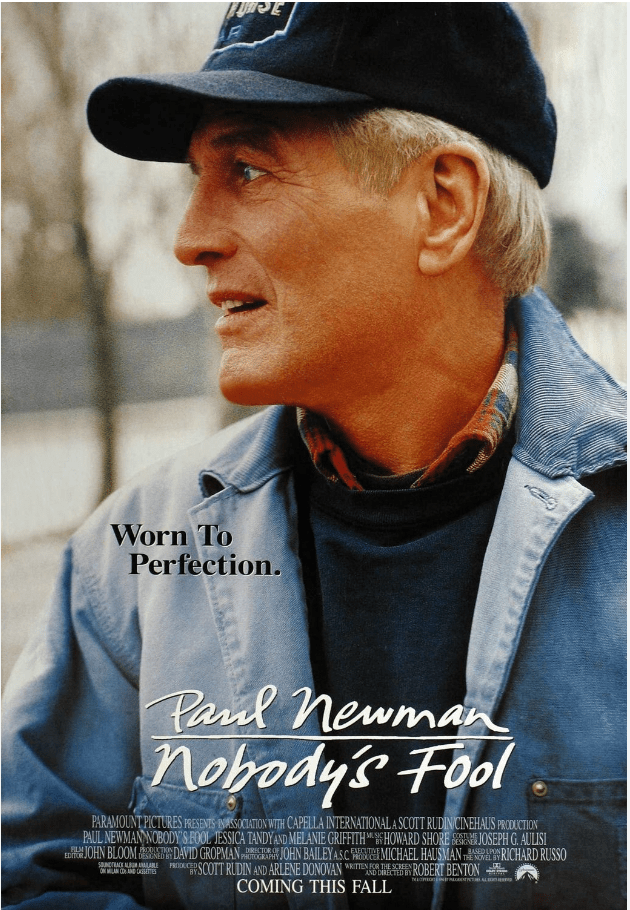
Paul Newman’s character in Nobody’s Fool is an excellent example of a flawed hero who is kind, but not necessarily nice. This is one of my favorite movies, and for me it’s got a similar vibe to It’s a Wonderful Life, because his character, while believing he’s a “loner” is woven into the fabric of the community. He doesn’t want to be dependable, needed, or even thought of as nice. He’s not nice, but he’s absolutely kind and helpful.
It’s a great film. I downloaded it from Amazon. It has an AMAZING cast, and is so well done. I can’t recommend it enough.
This is our first-ever blog post and I wanted to talk about critiquing and honesty. Why so few blog posts? Well, we’re writing books and it takes a lot of creative energy and that’s our primary focus. However, in September 2023 Sheila and I hosted two critique intensives. People had valid questions and concerns so, in hopes of helping others who are scared to give critique, are scared to get critique, don’t feel they know how to critique, and are scared to be honest, here goes.

You’ve read someone’s work and it makes no sense. Gently tell them. Or their character is unlikable? Gently tell them.
Be honest and kind.
First rule of critique: Are you really ready for critique? Do you need a “this is great” or are you actually willing to revise your work? If you don’t want to revise your work, DO NOT ASK FOR CRITIQUE.
Second rule of critique: The writer needs to ask a few (definitely less than five) questions. What do they want to know about their work? You cannot hand your work to someone and then ask, “What do you think?” It’s too vague, and the responses won’t be useful. You know what to ask. You know what’s bothering you. Figure out how to phrase it… For me, I recently sent out a draft of a Christmas Screenplay and my questions were, “Is the romance believable? Can you see them falling in love? Does this feel like a fit for a Hallmark Christmas Movie?”
Third rule of critique: Remember, critique is that person’s opinion based on everything they’ve learned about writing, everything they’ve read, how well they understand your genre and the publishing industry, and how good their day is going. If you’re in a group where everyone critiques your work and one of the critique partners doesn’t read your genre, doesn’t like your subject, doesn’t like you…don’t feel the need to read their critique. Only ask opinions from people whose advice you would take.
Fourth rule of critique: Let it sit for a few days before explaining your author’s choices and why the critique is wrong. Read the critique once, maybe not sober. Let it marinate before reading it again. I’m not going to lie, Rebecca Barray is my friend and an amazing editor and I know she’s always right, but I still need a few days to process it. Usually, during that time, I work through why the character’s motivations/goals/conflicts aren’t coming across the way I wanted, or how to revise my work with her critique in mind. I regularly say, “I know you’re right but I need a few days.” And she understands. Later, we brainstorm solutions. It’s incredibly helpful and useful. But even after ten years, I still need a few days.
Fifth rule of critique: You don’t have to use everything suggested. Use what works for your story and genre. But if everyone says you’re starting your story in the wrong place…you’re starting your story in the wrong place.
First rule of critiquing: BE HONEST AND KIND. Yes, shouty capitals are required. This is not the time to show how brilliant you are or pick out grammatical errors. Focus on the story questions and the story itself. If the story has a prologue and you hate prologues, tell the author that you hate prologues. (I am a unapologetic prologue hater.)
Second rule of critiquing: Let the author know how familiar you are with the genre. I usually state, “I don’t read Fantasy, so I don’t know if you’re hitting the genre and reader expectations.” I continue the critique based on what I do know, but at least the author knows that I’m talking about general story, and not fantasy-specific story. By the way, if you have not read a recently published book in that genre in the last year, consider yourself unfamiliar with the genre.
Third rule of critiquing: Answer the questions posed by the writer and only the questions posed by the writer. This is a bit squishy, because if the story has issues and they haven’t asked, then definitely leave a note at the end, just a few sentences. Often authors don’t start the story in the right place. It’s okay, even if they didn’t ask, to suggest that the pacing feels off, and starting at chapter two feels like the best opening for the story. Be honest and kind.
Fourth rule of critiquing: Don’t offer suggestions on how to fix it. That’s for brainstorming later. Do point out where you were pulled out of the story.
Fifth rule of critiquing: Absolutely point out what worked, and what made you smile or laugh. Always include some positive feedback. It could be the title, the characters’ names, the setting, the prose, the premise, but point out positive aspects of the story as well.